DCS 10-001: What Is Practice? Beyond Repetition in Military Drill
INSTITUTE FOR CEREMONIAL STANDARDS
Doctrine Clarification Series
DCS 10-001What Is Practice? Beyond Repetition in Military Drill
Category: Regulation Drill
Subject Area: Training Methodology and Motor Conditioning
Publication Type: Analytical Article
Status: Public Release
Date of Issue: 24 February 2026
Supersedes: None
Abstract
This article examines the concept of practice within military drill and ceremonies, distinguishing deliberate conditioning from simple repetition. Drawing on performance science and U.S. military doctrine, it analyzes how structured drill practice develops automaticity, cohesion, and disciplined command response.
Authority
Published under the auspices of the Institute for Ceremonial Standards (ICS) as part of the Doctrine Clarification Series (DCS), intended to provide analytical interpretation of established doctrine and training principles.
What Is Practice?
Beyond Repetition in Military Drill
The word practice is deceptively simple. It often suggests repetition—doing something over and over until fatigue sets in. But repetition alone does not produce mastery. If practice were merely duplication, its results would be mechanical and shallow.
True practice is deliberate, structured attention directed toward a defined standard. It is the disciplined process by which intellectual understanding becomes embodied capability. In military environments, this transformation is not aesthetic—it is operational.
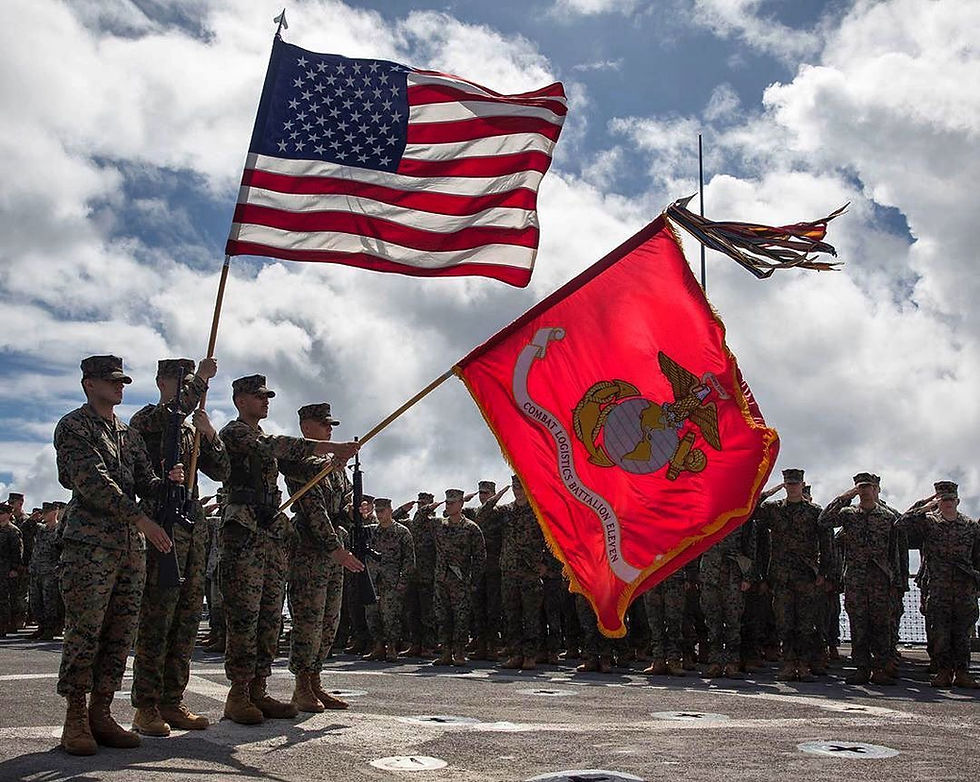
Few examples demonstrate this more clearly than military marching.
What appears ceremonial is, in fact, neurological conditioning, cognitive discipline, and institutional training in motion.
From Repetition to Deliberate Conditioning
Modern performance research confirms what military institutions have long understood: improvement results from deliberate practice, not rote repetition. Psychologist Anders Ericsson’s research on expertise shows that progress requires focused effort, immediate feedback, and continuous correction—not simple volume of repetitions.^1
Military drill follows this architecture precisely.
Effective practice requires:
Comparison against a clear doctrinal standard
Immediate correction
Focused cognitive engagement
Progressive refinement
The popular phrase muscle memory refers more accurately to motor learning—the nervous system encoding movement patterns until execution becomes automatic.^2
This marks the shift from:
Intellectual understanding (“I know how this should look”), to
Automatic execution (“My body performs correctly without conscious calculation.”)
Practice bridges that gap.
In military contexts, that bridge must be reliable.
Why Marching Matters
Military marching is frequently dismissed as ceremonial. Doctrine says otherwise.
Drill and ceremony develop:
Unit cohesion
Immediate response to command
Efficiency of movement
Collective synchronization
U.S. Army TC 3-21.5 states that drill builds discipline and the ability to execute commands as a unified element.^3 The Marine Corps Drill Manual emphasizes the same principles.^4
Historically, close-order drill allowed formations to maneuver under fire and maintain cohesion in chaotic conditions. While tactics have evolved, the cognitive principle remains constant: automatic response under stress reduces hesitation—and hesitation costs time.
When a command is given, execution must follow without delay.
That capability is practiced into existence.
The Architecture of Drill Practice
Marching appears simple. It is not.
It integrates multiple controlled variables:
Posture — establishes bearing and structural efficiency
Cadence — synchronizes the unit
Stride consistency — maintains alignment
Command response latency — shortens reaction time
Training progresses systematically:
Individual fundamentals (position of attention, facing movements)
Small-unit synchronization (squad alignment and cadence control)
Large-formation maneuvering (platoon and company coordination)
Each level increases complexity and compresses response windows.
The drill instructor serves as a precision feedback mechanism—enforcing standards, identifying deviations, and sustaining focused attention. Without feedback, repetition stagnates. With feedback, repetition refines.
Friction and Mental Conditioning
Effective practice includes friction.
Fatigue, environmental stress, and monotony are not accidental—they are developmental. Extended drill demands postural endurance, lower extremity strength, and sustained concentration.
Doctrine recognizes that realistic training under stress prepares service members for operational environments.^5 Drill provides controlled exposure to discomfort while preserving safety and structure.
At the same time, repetition must be intelligently balanced with variation—different terrains, weather conditions, and stress variables—to ensure automaticity is adaptable, not brittle.
Robust skill transfers.
Practice as Continuous Refinement
Practice is never finished. Even experienced units rehearse fundamentals. Advanced ceremonial elements require constant calibration. Precision degrades without reinforcement.
Flawless drill execution is not the objective—it is evidence. It signals:
Discipline internalized
Teamwork synchronized
Command authority respected
Neuromuscular patterns conditioned
To march correctly is not merely to move in step. It is to demonstrate alignment between mind, body, and institution.
Practice, therefore, is not repetition.
It is structured transformation.
Citations
Anders Ericsson, Ralf Krampe & Clemens Tesch-Römer, The Role of Deliberate Practice in the Acquisition of Expert Performance, 100 Psychological Review 363 (1993).
Richard A. Schmidt & Timothy D. Lee, Motor Learning and Performance (5th ed. 2011).
U.S. Dep’t of the Army, TC 3-21.5, Drill and Ceremonies (2021).
U.S. Marine Corps, MCO 5060.20, Marine Corps Drill and Ceremonies Manual (2019).
U.S. Dep’t of the Army, ADP 7-0, Training (2019).
Prepared by: The DrillMaster
Institute for Ceremonial Standards
Publication Footer – Web Edition Standard
Institute for Ceremonial Standards (ICS)Doctrine Clarification Series (DCS)
This publication is part of the ICS Doctrine Clarification Series, which provides analytical interpretation, doctrinal clarification, and professional education regarding military drill, ceremonial standards, and institutional training principles.
ICS publications do not replace official service regulations. Readers are responsible for consulting current service manuals and governing directives.
Citation Format: Institute for Ceremonial Standards, [Title], DCS XX-XXX (Year).
Example: Institute for Ceremonial Standards, What Is Practice? Beyond Repetition in Military Drill, DCS 10-001 (2026).
Permissions: This article may be quoted or reproduced for educational purposes with proper attribution to the Institute for Ceremonial Standards. Commercial reproduction requires written permission.
Official Website: www.ceremonialstandards.org
© 2026 Institute for Ceremonial Standards. All rights reserved.


Comments